Gift ideas
Collecting cash for a group gift is one of the most uncomfortable social dynamics. Here's how to skip it entirely.
You've been here before. Someone you work with is leaving, or a friend is turning 40, and you've stepped up to organize the group gift. It feels like a kind gesture right up until you realize what you've signed up for.
The follow-ups. The reminders. The "I'll Venmo you later" that becomes a week of gentle nudges. The person who forgets entirely. The person who sends $5 less than agreed and you decide it's not worth mentioning. The awkward moment when you have to ask your boss to contribute to your boss's gift.
Organizing a group gift is one of those social tasks that sounds simple and turns out to be a quiet tax on your goodwill.
The friction isn't really about the money — it's about the asymmetry. One person (you) carries all the organizational weight and the financial risk. Everyone else participates casually. If someone doesn't pay, you either absorb the shortfall or have an uncomfortable conversation.
This dynamic also shapes how people participate. When contributing to a group gift means handing cash to a colleague, some people opt out — not because they don't care, but because the social friction is higher than their motivation. You end up with fewer contributors, less buy-in, and a gift that feels more like a collection plate than a genuine group effort.
The best group gifts happen when every participant has a clear, friction-free way to contribute on their own terms.
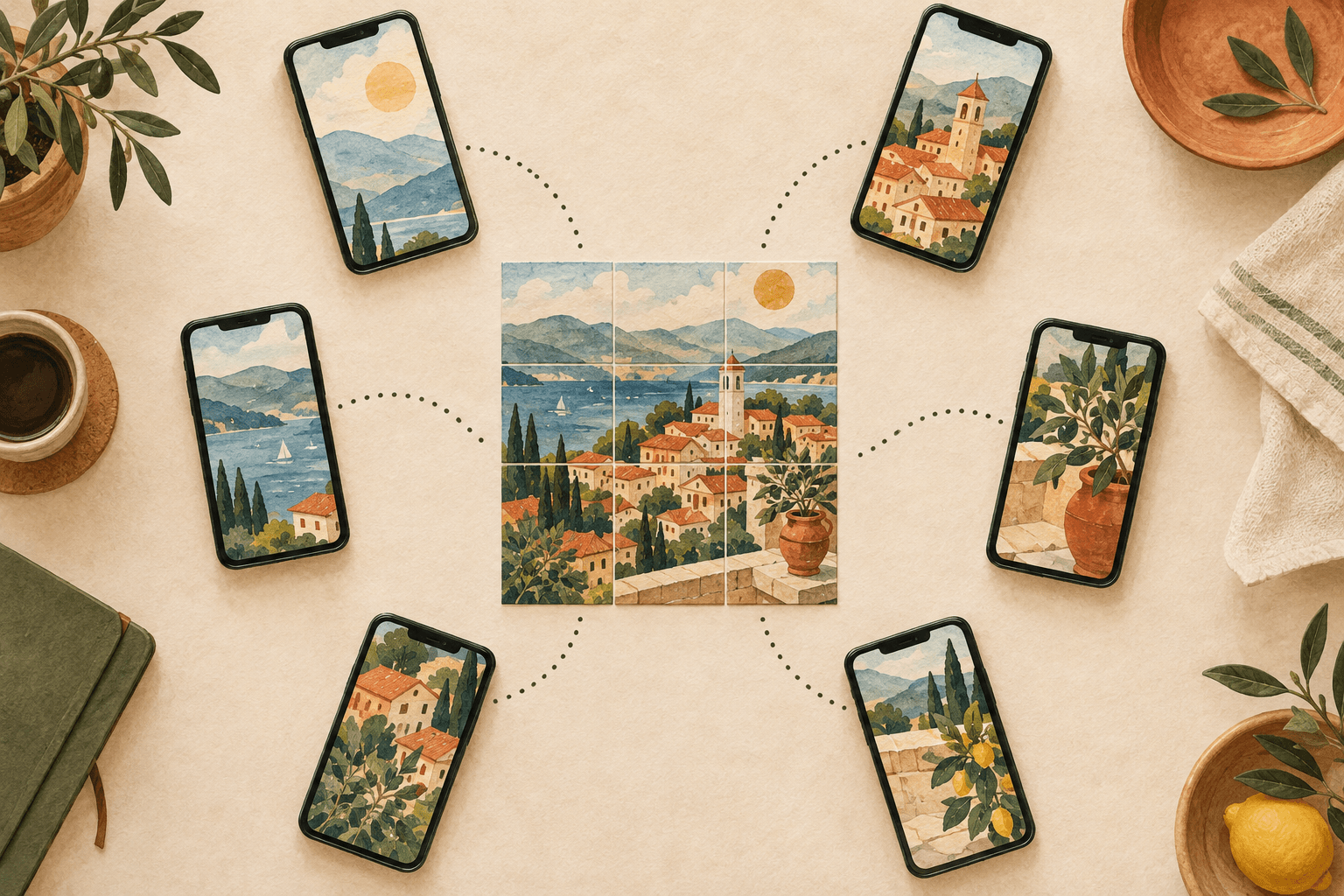
TraceAndTale was built around a different model. Instead of one person collecting money and distributing it, each contributor pays their own seat directly — at the moment they draw their piece, on their own phone or computer.
No one handles anyone else's money. No Venmo chains. No spreadsheet. The organizer never touches a payment. Each person decides independently whether to participate, and their decision is both their contribution and their commitment.
Choose the print format, set a deadline, add the recipient's name. You get a unique invitation link.
Drop it in a group chat, a Slack channel, an email thread. Each person who clicks it gets their own private drawing canvas. They draw, they pay their seat ($14–$22), they're done.
From your dashboard, you can see who has submitted and who hasn't — without anyone feeling pressured. The deadline does the work for you.
Once the deadline passes, we assemble all the drawings into a single artwork. You review and approve it, then we print and ship directly to the recipient.
The result is a group gift where every contributor genuinely participated — not just paid. The difference in how it feels to receive something made by 18 people versus something bought with 18 people's money is enormous.
You still get the credit for organizing it. But without the part that makes it feel like a second job.
Ready to start?
Everyone pays their own seat. No organizer upfront. Cancel anytime before production.
Start a gift campaign